Beko Dishwasher Error Codes & Solutions: A Comprehensive Guide
Beko dishwashers are renowned for their reliability and innovative technology. However, like any complex appliance, they can occasionally display error codes that signal underlying issues. Understanding these codes empowers you to troubleshoot problems effectively and decide whether you can resolve the issue yourself or need professional help.
Beko dishwashers are renowned for their reliability and innovative technology. However, like any complex appliance, they can occasionally display error codes that signal underlying issues. Understanding these codes empowers you to troubleshoot problems effectively and decide whether you can resolve the issue yourself or need professional help.
At Beko Service Center, we have compiled the most common error codes to help you troubleshoot the issue—and, more importantly, to help you decide when to pick up the phone and call a professional. Beko Technical Support
Beko dishwashers are equipped with a self-diagnosis system that helps identify faults when they occur . When an error appears on the display, it’s the appliance’s way of communicating what’s wrong. This guide covers the most common Beko dishwasher error codes and provides step-by-step solutions.

Why Regular Maintenance Matters
Before diving into specific error codes, it’s worth noting that many issues can be prevented with proper maintenance. Dishwashers are used daily, which means limescale can build up quickly, especially in hard water areas. Regular descaling helps your dishwasher work efficiently and keeps your dishes coming out clean. If your dishwasher has a water softener function, use softening salt regularly to prevent limescale-related problems.
Common Beko Dishwasher Error Codes and How to Fix Them
Water Supply and Filling Issues (E14, E16, E17, E18, E32)
What they mean: These errors indicate problems with water entering the dishwasher. The water supply may be restricted, or there may be issues with the filling system.
Troubleshooting steps:
- Check the water supply: Ensure the water valve is fully open and check the water pressure. The flow rate should be approximately 10 litres per minute.
- Inspect the inlet hose: Look for kinks, bends, or damage that might restrict water flow.
- Clean the inlet filter: Debris can accumulate in the filter and block water entry. Clean it under running water with a soft brush.
For E18 specifically, the error may indicate that the water level is too low or water isn’t being pumped correctly. Check the inlet hose for kinks and ensure the water supply is turned on.
Drainage and Pump Issues (E22, E24, E25)
These are among the most common Beko dishwasher errors and typically relate to blocked filters or pumps.
E22: Blocked Filter
What it means: The dishwasher filter is clogged with food particles and debris .
Solution:
- Locate the filter at the bottom of the dishwasher interior.
- Remove the filter and wash it under running water with mild soap and a soft brush.
- Remove all debris and reinstall the filter securely.
- Clean the filter regularly to prevent recurrence.
E24 and E25: Drain Pump Issues
What they mean: The dishwasher isn’t draining water properly. The drain pump may be blocked, or the pump cover could be loose or missing.
Troubleshooting steps for E24/E25:
- Check for kinks: Ensure the drainage hose is not bent, kinked, or blocked.
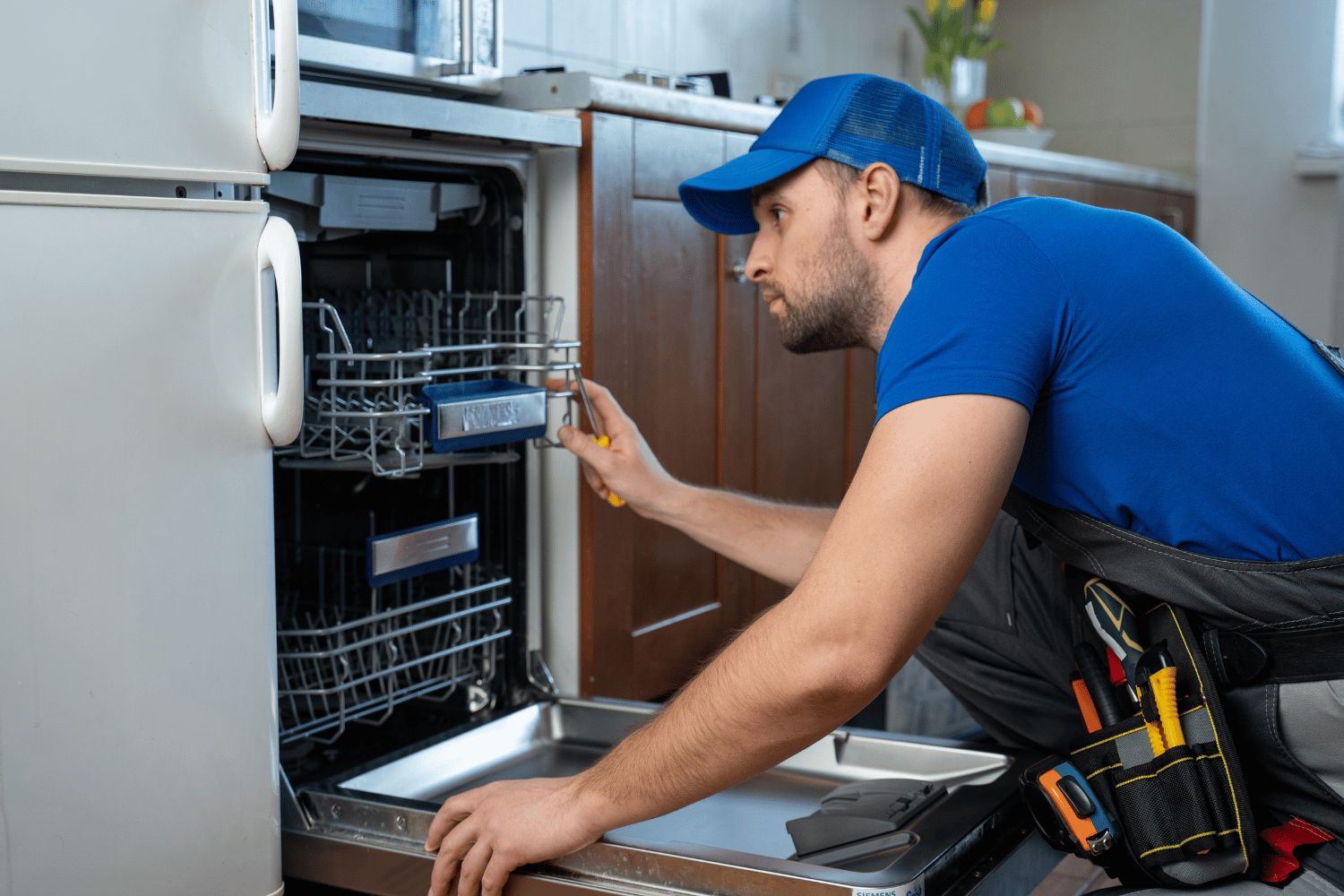
- Clean the pump: This involves: Setting the programme selector to OFF and unplugging the appliance. Removing the filters from the bottom of the dishwasher. Removing the pump cover (you may need a spoon to pry it off). Carefully removing any foreign objects or debris from the pump. Use caution as glass fragments may be present. Checking that the pump impeller rotates freely. Replacing the pump cover securely until it clicks into place.
- Check the siphon connection: If the drain hose is connected to a siphon, ensure the connection is open and not clogged.E6103: This is another variant of the same drain pump issue and can be resolved using the same steps as E25.
Water Leakage Issues (E15, F15)
What it means: The safety switch has detected water in the base of the dishwasher. The leakage protection system has been activated.
E15 is a serious error that indicates a potential water leak. Beko strongly recommends against attempting to resolve this issue yourself due to health and safety reasons .
What to do:
- Immediately turn off the water supply.
- Check around the dishwasher base and hoses for visible leaks or damage.
- If you notice visible damage to hoses, you may order replacement spare parts.
- If the fault is not visible, contact Beko customer support or book an engineer appointment. Do not attempt internal repairs.
Power and Voltage Issues (E27, E90)
What they mean: These errors indicate a problem with the power supply voltage, not the dishwasher itself.
E27 specifically means the mains voltage is too low (usually below 170V) . The user manual often states this is “not an appliance fault” and recommends having the electrical installation checked.
Troubleshooting:
- Check the plug and socket—try plugging another device into the same socket to test it.
- Check your circuit breaker and reset if needed.
- If the issue persists, contact an electrician to check incoming voltage to your appliance.
A note from experience: In some cases, the E27 error may actually indicate a control board fault rather than a simple power supply issue. If other troubleshooting fails, consider having a certified technician inspect the control board.
General Technical Errors (E01-E05)
What they mean: These errors indicate a general technical fault within the dishwasher.
Solution: Try resetting the appliance by turning it off, waiting a few minutes, and turning it back on. If the error persists, contact Beko customer support.
Limescale Build-Up (E Heater/Heat Pump Errors)
What they mean: Limescale has built up in the heat pump or heating element.
Solution: Use the Beko descaler to descale the dishwasher. Regular descaling prevents this issue and extends the life of your appliance.
Other Errors Requiring Professional Help
E09, E19, E20, E21, E23, E26, E30, E31 – These errors typically indicate a part failure and are not recommended for DIY repair. Contact Beko or a qualified technician for assistance.
E0103, E0105, E0106, E0107, E0110 – These indicate electronics miscommunication or circuit board failures. Professional diagnosis is required.
E2030, E2060, E2120, E2130, E3000, E3100, E3200, E3300, E3400, E6001, E6002, E6101, E6102 – These are various electronic and component faults that require professional service.
General Troubleshooting Tips
Reset Your Dishwasher
Many errors can be cleared by performing a simple reset:
- Turn off the appliance.
- Wait a few minutes.
- Turn it back on and restart the cycle.
Alternatively, reset the power to the circuit breaker for 30 seconds.
When to Call a Professional For Beko Dishwasher Repairs
Not all dishwasher problems should be tackled alone. Contact Beko customer support or book an engineer appointment when:
- The error code doesn’t clear after basic troubleshooting.
- You notice visible leaks or suspect internal damage (E15).
- The dishwasher displays electronic or heater-related errors (E09, E19, E20, etc.).
- You’ve cleaned filters and pumps but the problem persists.
Preventative Maintenance
- Clean filters regularly: Remove and wash filters under running water.
- Use dishwasher salt: If your model has a water softener, use salt to prevent limescale.
- Descale periodically: Use Beko -approved descaler for ongoing maintenance.
- Check hoses: Inspect inlet and drain hoses for kinks or damage periodically.
Need Professional Help?
If you’ve tried troubleshooting and the error code remains, or you’re uncomfortable performing any repairs yourself, contact Beko customer support in UAE at 058 282 3646 or your local authorised service centre. Certified technicians have the expertise to diagnose and fix your dishwasher safely and efficiently, ensuring genuine parts and professional service.